Showing posts with label chicken noodle soup. Show all posts

Chicken noodle soup


I would like there to be beans in this soup.

Anasazi beans. 


 The broth comes from the chicken roasted earlier and the chunks of chicken in the chicken soup came from the same roasted chicken. 

Did I ever show you how to deal with the dead bird carcass to produce a chicken broth so delicious that it is termed Liquid Gold and traded on the EPLCM, that is the Escoffier Precious Liquid Commodities Market? I haven't? Very well. 

You have a roasted chicken as the one pictured in the link above and you picked off all of the good bits and they have gone their separate ways, sandwiches, soup like this one, nibbling and so forth. 

So there is that, and that would be enough, a bargain right there, but now on to the carcass and the broth. 

By acknowledging the anathema that wasting a carcass is to culinary catechism one attempts to extract the most from the sacrificed bird, and that shows consideration, but then to go on and intensify everything by roasting before all the flavors, nutrition, colors, are extracted shows deliberation even though it only takes a few minutes to broil the bones. 

The re-roasted bones are brought to the stove top, water added to the pot, and the whole lot simmered until the last flavor molecule is drawn from the carcass, the skin, the neck, gizzard, livers, heart, everything that came with it. Onion, carrot, celery, now added if you like them. Bay leaf, whatever, anything at all you like, except salt. 

Save salt for the very end or when the broth is portioned out and used. The liquid concentrates as it boils, so it wouldn't do to over salt early on. That is one major problem with commercial broths. They are already heavily salted and concentrating them makes it worse. Why do you pay more for low-salt broth then if they are using less salt shouldn't they charge less? They have to make up the flavor another way when they use less salt, more expensive ingredients, like chicken. 


Straining takes two large pots. There is some back and forth. 


Strained back into the original pot. 


Strained into the storage container using an even smaller strainer. 


These broth photos were taken days ago when the chicken was roasted ↑.

These photos were taken tonight ↓.  

The broth sat in its tall container sealed up beneath its chicken schmaltz lid. Underneath the layer of fat is another layer of aspic. The depth of this aspic and its completeness as gelatin will indicate how much nutrition is extracted from the carcass. If there is a watery layer of gelatin, or none at all, then that will indicate little nutritional value. What you are looking for is gelatin all the way through straight to the bottom, good solid gelatin too, not loosey-goosey watery gelatin. 

This is loosey-goosey watery gelatin, but it is gelatin all the way through, so neither the worst nor the best. I was pleased with it actually when I consider it is a single ordinary battery chicken of no great mass. Usually people freeze them until they have more than one carcass to make the process worth while. 


So what is Anasazi?

The Ancient Ones, although the modern Pueblos do not much care for the designation because the word also means ancient enemy. There were four main tribes inhabiting the area, the Anasazi concentrated in the northern portion of the range covered by the four early tribes. This is in modern day Colorado, shaped like a square, in the far lower left corner. Looking at a map of the  U.S. state borders one's eye is drawn to the geometric oddity near the center termed The Four Corners. That is the area inhabited by the four early tribes although its Four Corners designation would be 3,200 years later. 

The Anasazi were cliff dwellers. Their site is known today as Mesa Verde, green table, Spanish words, not Amerind. The cubicles built into the cliffs are part of a larger system of roads and ritual sites. Their fate is debated. There is the pattern of drought and flood, there is evidence of resource depletion, evidence of conflict. 

You can go there and explore the place. Walk around. Crawl around up and down, up down, up down narrow walkways, short pass throughs, irregularities with every step. Bring up water, bring up wood, bring up supplies, carrying out refuse, litter, compost, waste. One sees rather quickly that life on the cliffs couldn't have been all that splendid. Life in the shadow of the cliff. Protected. Yes. Yes. Yes. But it's the sort of thing that cannot last. Eventually you gotta break out. It leads to greater things -- facing the challenges of nature and conflict uncowed out in the open.

Did they starve? Were they wiped out? Buried by flood? Murdered by enemies? Enslaved? Calm down! They changed. They moved on. They intermingled with neighboring tribes. They evolved. They became the modern Pueblo peoples.  

Here's to getting off the cliffs. 

Chicken noodle soup


Chicken noodle soup made earlier and frozen. In scrounging mode, I noticed the bags there in the freezer and thought, "That'll work just fine."

The thing is, though, the whole batch was left a little on the bland side so that smaller reheated batches could be seasoned variously. Upon taste-testing I thought, "You know, bland is one thing, but come on, this is like for a baby or something."

But even this didn't help enough. The bowl was adjusted further, first with sea salt, then with cayenne, then finally with some kind of greenish curry and more pepper. At last the point was reached of verging on having gone too far, and that is what I like. 

I stirred it so much my dad-gum noodles are all breaking.

It's a very simple meal, really, not that much to show. So here, have yourself some food porn arts.


Chicken noodle soup


With tofu in a duck broth. What follows is a photographic tribute to the glories of leftover ingredients, that and a reliably stocked pantry. You will recognize the ingredients from previous recent posts, if you've been following, and if you haven't been following then what's taken you so long to catch on? 


The texture of the spaghetti is a little bit rough because it was extruded through old-fashion bronze dies in contrast to newfangled silicon dies which are faster, useful for high-volume production, much cheaper than bronze, and produce an unfortunate smoother noodle. The rough texture made by the old dies assists sauces to adhere, an attribute that is not important to us when used in soup. 


As always, the aim is al dente, not noodle-mush. The pasta is removed while still excessively al dente because the noodles will cook further and finish once it is added to the soup. 


Mise en place of the early ingredients, but not all the ingredients. 


I concluded a broad pan is more useful for soup than a tall pot because everything introduced in stages can be seared at once. 


Black-eye peas and brown rice from New Year day.


Chicken roasted previously and frozen in Food Saver bags.


Tofu and duck stock gelatin prepared previously. There is no more duck meat, there wasn't much of that to begin with, but there is chicken meat so chicken was substituted. There is still some more duck broth and chicken meat left. 

Not shown; the usual Asian ingredients that I've become quite fond, sake, shoyu, fish sauce, mirin. Without those I could have used wine, salt, anchovy, and honey.

I must add, this soup is much easier and faster to make than it is to describe. I take the trouble to do this for the benefit and betterment of mankind  and because I am trying desperately to avoid cleaning the fifty gallon aquarium, but mostly because I am avoiding cleaning the aquarium. 

This soup is differentiated with nori, the seaweed processed into paper-like sheets that is used for sushi. Wakame is another seaweed, kombu a kelp, that also could have been used, among others. And  if I had them on hand I would consider the full range of attractive typically Asian ingredients; bamboo shoots, water chestnuts, bean sprouts, green vegetables, daikon radish, shitaki mushrooms among several others. Tamari in place of shoyu, miso, and many other ingredients including scallion, cilantro, and  not least something with kick, chile flakes, Sriracha, Tabasco, habanero, even any of a full range of prepared curries.

Chicken noodle soup


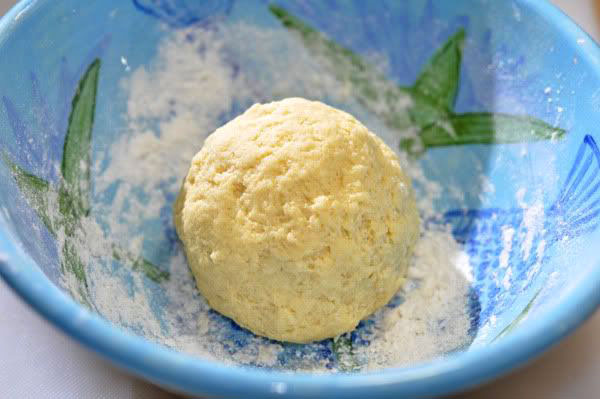
Asian style. Ordinarily, you'd take a whole chicken, throw it in a pot, boil it until it falls away from the bone easily. Before you reached that point, you'd add celery, onion, carrots, a mirepoix if you were to do things correctly, which my mother, bless her, did not.  And which would have come first. Actually, to be totally correct about it, the good chef realizes that whereas roasting a chicken concentrates flavor, boiling one dilutes flavor. And after the chicken is roasted, the bones are then roasted too, just to make sure that every molecule of flavor that bird has to offer is extracted, concentrated, and layered via the miracle of Maillard reaction. But I am not doing any of that. And I am not doing what I saw my mother do either. I'm striking out on my own here and following my own lights. I'm using a single chicken thigh, albeit a large one, and a carton and a half of prepared chicken broth along with aromatics as suits me, and a few Asian additions. I'll also make my own egg noodles because that's what I'm all about tonight. I got a wild hair to make noodles by hand, like a little old Italian lady, and without the aid of the Atlas because I do not feel like dragging it out and clamping it up. Down. On. Whatever. And Plus I get to hone my mad pasta-skillz. 

Whap  whap  whap  whap  whap  whap  whap  whap  whap  whap  whap whap whap  whap  whap  whap  whap  whap  whap  whap  whap  whap  whap  whap  whap  whap  whap whap  whap  whap  whap  whap  whap  whap  whap  whap.   Done.  A whole row of perfectly spaced pasta strands. And, Man, are they ever good. I totally forgot how supremely better my own egg noodles are compared to the best I can buy. This is child's play for me.  I'm awesome. 

Here's how I made this in the order it was done. The process is linear.  The pasta was made first and held in reserve then added last. I guess that's circular innit. It's linearly circular then. Not shown, one tablespoon sugar. No salt and no pepper.  The yellow powder is semolina flour next to all purpose flour. A green bell pepper is shown cut but not shown whole. The chicken thigh was cut up into pieces, and the skin and fat were rendered, all reserved in the pot to oil and flavor the remaining ingredients. The pot was deglazed with sake. That sake sure went fast, the whole bottle is almost all gone. Then the remaining ingredients added one at a time as a stir-fry with the noodles last. 

No more words, now, just pictures.


Blog Archive